
Why the Ferrari Luce looks like that
7 min read May 30, 2026
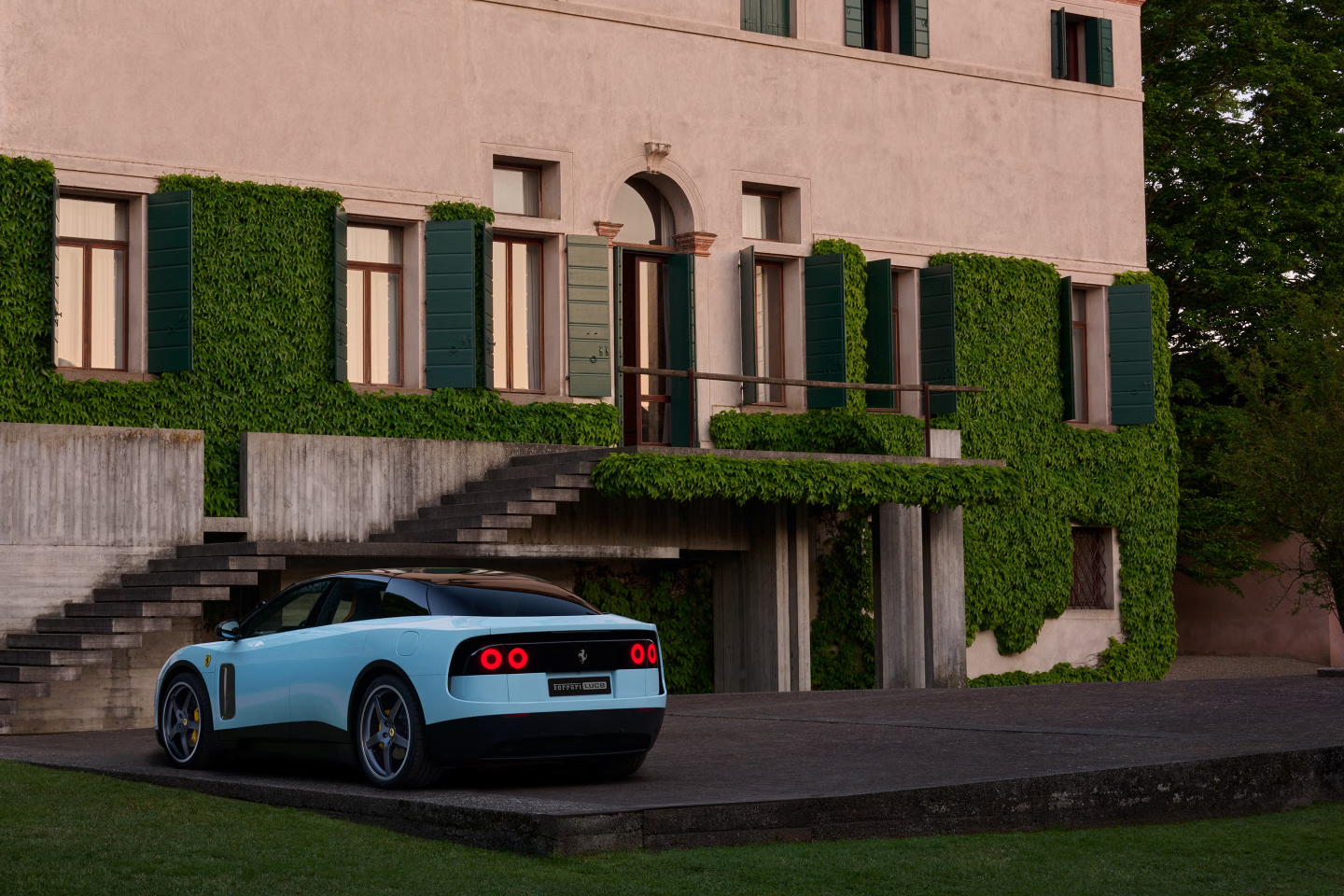
Seems like the whole automotive and technology world woke up earlier this week, took one good look at Ferrari’s new $640,000 Luce EV, and then hated it. The internet is rife with comments about it — almost all of them negative.
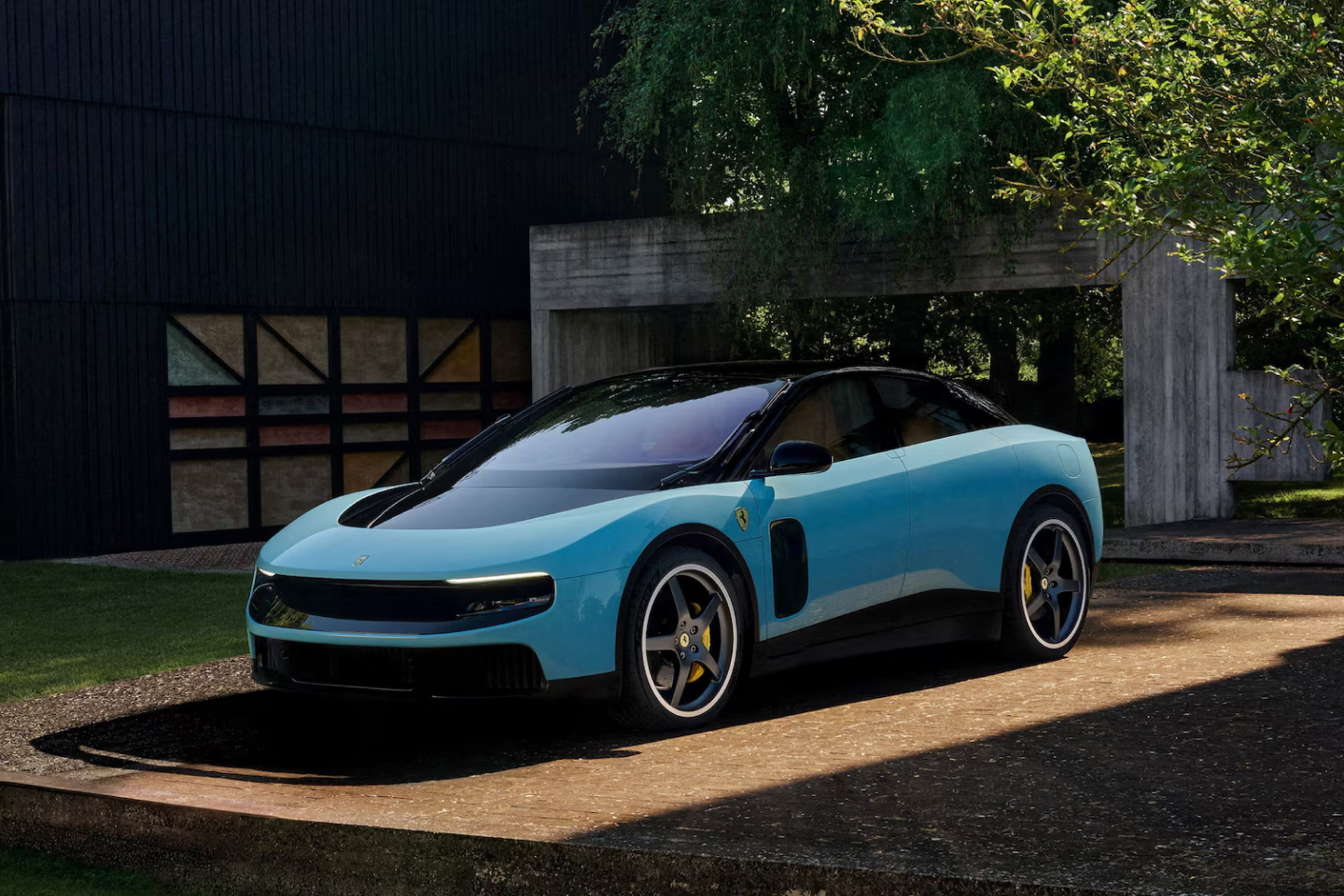
Let’s be honest — the thing looks like a bar of soap. When I think Ferrari, I think of the F40, which was basically a race car with just enough added to make it street legal.
 Ferrari F40
Or I think about the Ferrari Enzo, which looks like a stealth fighter with wheels on it.
 Ferrari Enzo
The Luce is pretty, but it doesn’t look like a Ferrari. It’s big and bubble-like. It doesn’t look aggressive. It doesn’t look like it’s moving 200 miles per hour when sitting still, the way most modern Ferraris do.
So how did it come to this?
Why make an EV?
To get to that answer, we have to back up to about five years ago, when Ferrari chairman John Elkann was interviewing the current CEO, Benedetto Vigna. During those conversations, he floated the question: of working with Jony Ive and Marc Newson’s design consultancy, LoveFrom: “What do you think if we work with LoveFrom?”
You see, the world of EVs at that time was very different. Trends pointed at EV sales going up dramatically across the world.
At that time, regulations were going to firmly pushing manufacturers to make EVs. The EU was considering banning internal combustion engine (ICE) cars altogether, which in 2023 was codified into a complete ban on new ICE-powered vehicles starting in 2035 (which they have since slightly walked back). And many cities had started to put dates on the calendar after which internal combustion cars wouldn’t be allowed in.
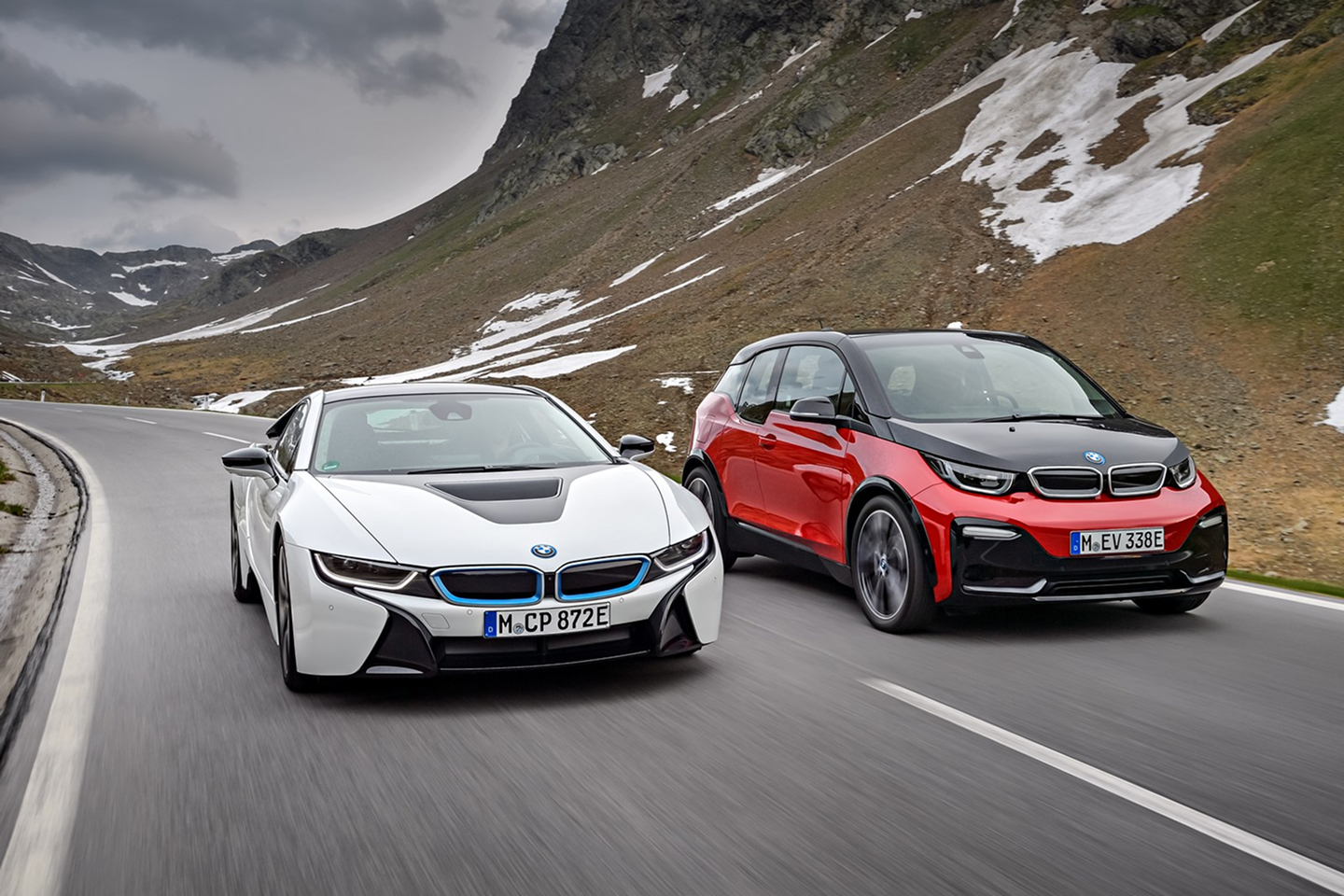
If you looked around at the rest of the industry at that point, everyone was pivoting toward EVs — and many legacy manufacturers were considering entirely separate product lines. BMW had the i3 and i8, which shared very little in common with the rest of their lineup.
Mercedes was beginning to sell the EQ vehicles, which again were positioned completely differently than their traditional cars.
That sort of answers why they would even want to make an EV — a strange question for a company known best for high-revving V12 engines that drink only high-octane fuel. What kind of car would the first Ferrari EV be?
Positioning the Luce
The first question they probably wrestled with is how to position this vehicle among the rest of their lineup.
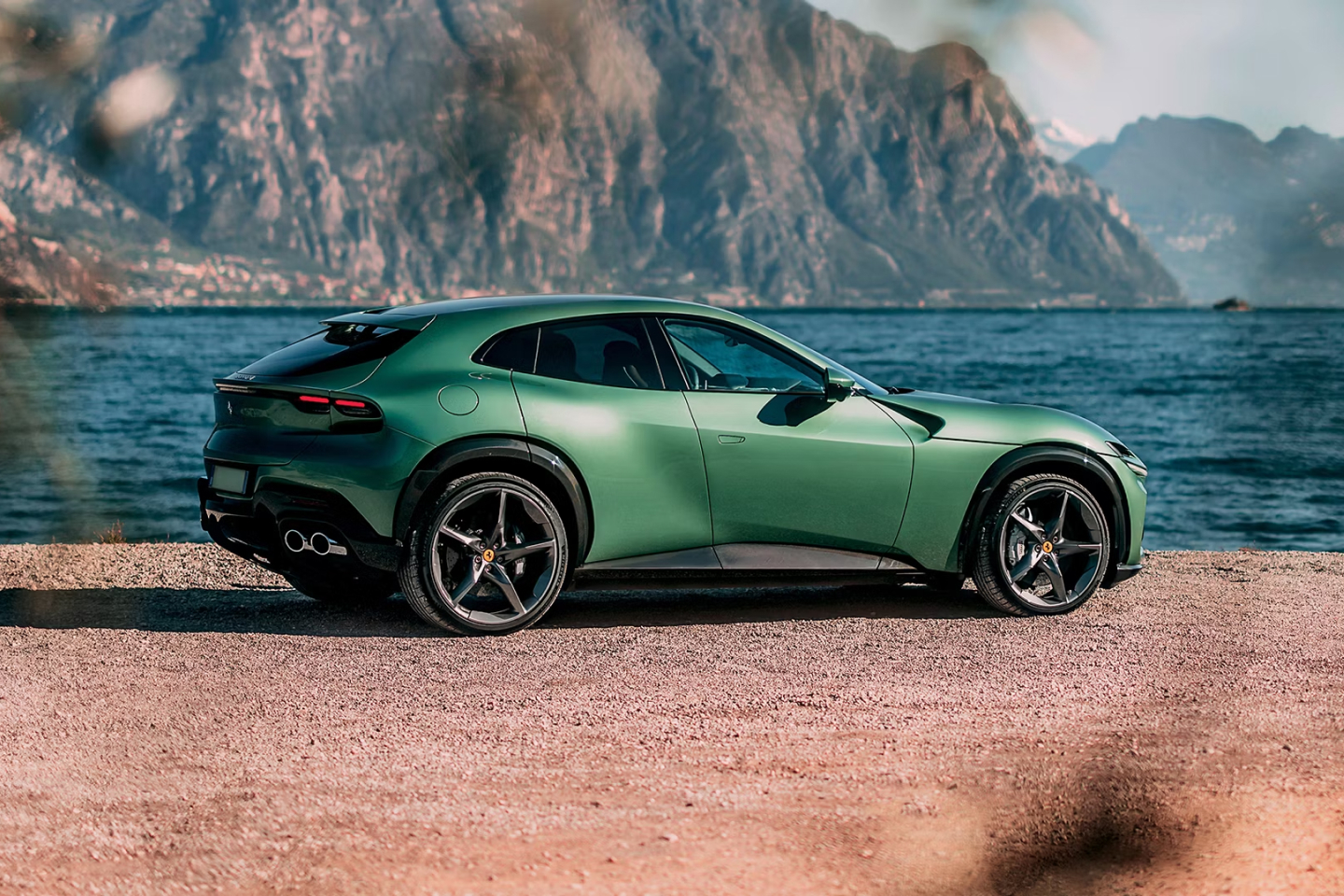
The Ferrari lineup has stayed consistent over the last several years — different kinds of sports cars at a range of prices. There are a few outliers here and there, such as the new Purosangue SUV, which can seat up to four. And there have been some changes along the way, such as their mid-engine sports car now featuring a hybrid powertrain instead of a traditional V8. But overall, slotting in an EV is not an easy task.
They could have done what Mercedes Benz tried — setting up a parallel line of EV-only cars. With the benefit of hindsight, we know that has been a disaster. It confused and alienated customers by presenting new bubble-like cars with huge screens and garish lighting. The EQ vehicles shared little with other Mercedes Benz vehicles.
They could have replaced existing models in their lineup altogether, like Porsche did with the new EV-only Macan SUV — a move Porsche now admits was a mistake.
So thankfully, Ferrari chose neither of those paths, which left one option: add a new car to the current lineup.
And in that light, it makes a lot of sense that they’d land on a five-person people mover. It wouldn’t compete directly with anything else in the line, providing a clear answer to the question of why someone would buy it. Ferrari could capture value from customers who already own a Ferrari or other sports car for weekends and road trips, but rely on something more practical for day-to-day life.
Why so smooth?
Peel away the carbon fiber skin of a modern Ferrari — take the SF90, the outgoing top-of-the-line flagship sports car. On the inside, that thing is almost entirely powertrain. You’ve got an internal combustion engine, electric motors and batteries, a massive amount of cooling hardware, and all of the associated mechanical components needed to make everything work together. That leaves surprisingly little space, which then gets dedicated to the passenger compartment.
 SF90 powertrain
And when you look at the outside, most of the aggressive-looking elements are actually functional. Big spoilers are there to generate downforce. Large intakes feed the engine. Other intakes go to radiators cooling the engine, motors, and batteries. The powertrain choice and the passenger requirements dictate what the car ends up looking like.
 SF90 exterior
With EVs, it’s all quite different. We’ve known for a very long time that an EV is essentially a skateboard with a passenger compartment on top. GM demonstrated this back in 2002 with the Hy-Wire concept, where the skateboard chassis offered interchangeable body shells — and that’s essentially how modern EVs still work.
You’ve got a massive, heavy battery pack, and it makes no sense to put it anywhere but at the very bottom of the vehicle. The motors, likewise, need to stay close to the wheels. In Ferrari’s case, they’ve gone as far as putting a dedicated motor at each individual wheel.
That brings us to the body. With EVs, aerodynamics is a major driver of range. Given a fixed battery size, your range is going to be determined by your frontal surface area, your coefficient of drag, and how smooth the body is. Look at any electric vehicle and you’ll see the same formula: low nose, an almost egg-like silhouette, smooth sides, flush door handles. Any deviation from that equation costs range. Range remains one of the most important factors potential buyers consider.
 Tesla Model X
So this tells us why the Luce is so smooth on the outside — with uninterrupted surfaces flowing between the black polished aluminum and the glass canopy. Physics is dictating that form follows function. This raises an uncomfortable question about why they’d place a prancing horse on something designed by drag coefficients.
The Porsche Taycan and electric Macan SUV both are unmistakable members of the Porsche family. Can you spot which of the cars below are EVs?
 Left to right: 911,
Panamera, Cayenne, Boxster, Macan, Taycan
Left to right: 911,
Panamera, Cayenne, Boxster, Macan, Taycan
So to understand why the Luce looks so completely different from every other Ferrari, we have to look at the target audience.
Who is the target audience?
In 2025, Ferrari delivered more than 13,500 vehicles. 81% of those went to existing owners who already had at least one Ferrari, and 48% owned more than one. Ferrari’s loyal customers, in other words, have no problem buying cars with internal combustion engines or hybrid powertrains. So for growth, Ferrari has to look elsewhere.
As Flavio Manzoni has acknowledged, the Luce is designed, not for traditional Ferrari customers, but for newer clients familiar with the tech and luxury products designed by Jony Ive and Marc Newson. Ferrari is trying to get the tech entrepreneurs of Silicon Valley to buy a Ferrari as their daily driver.
And it’s here that everything starts to come together. Manzoni again: “The idea was to avoid the conventions and codes of car design.”. They’re trying to make something so different that it attracts an entirely new kind of buyer. They have no interest in adding something that appeals to their current demographic — those people are already getting exactly what they want.
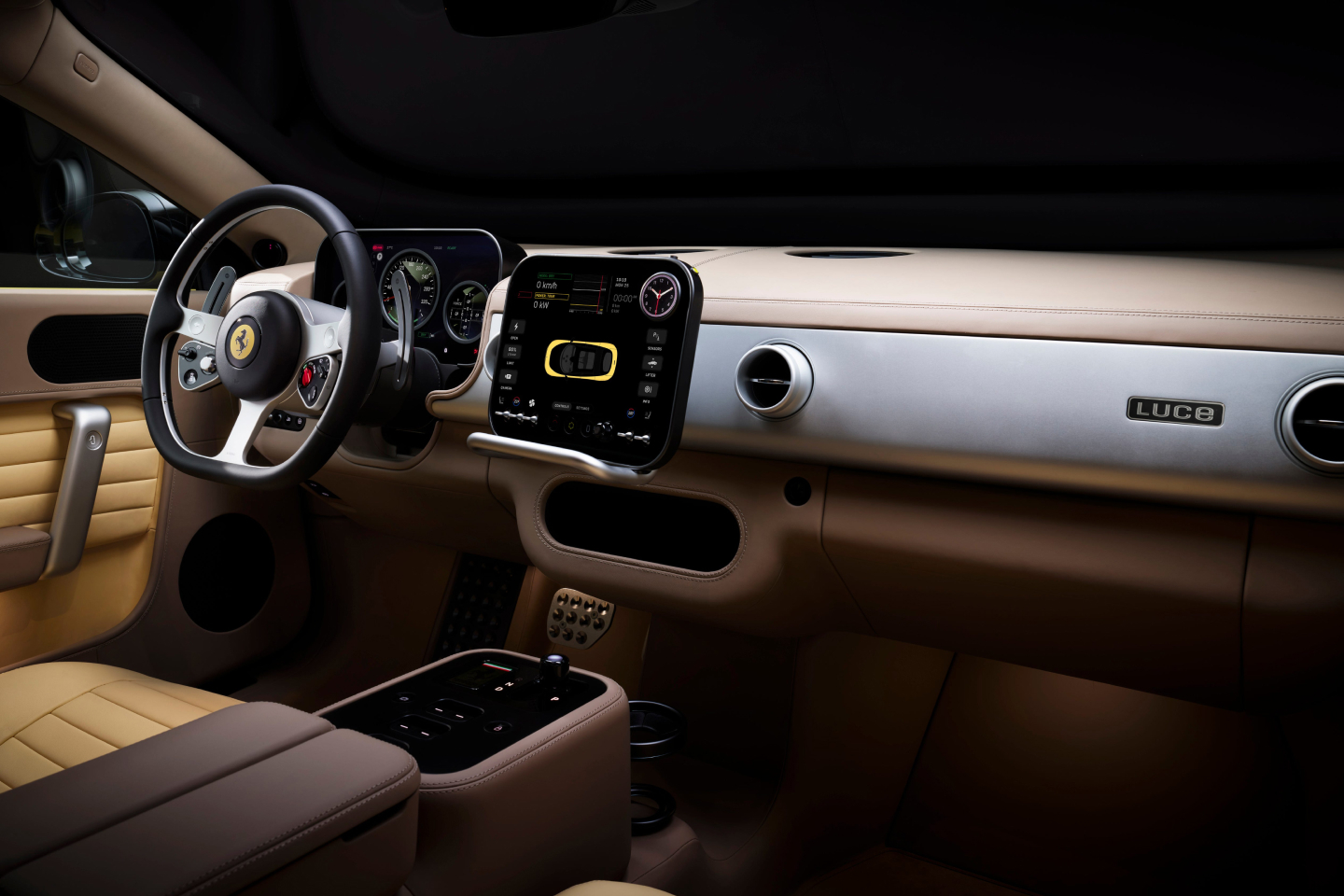
And given that this new audience — the tech elite — tends to respond strongly to user interface and the kind of refined, considered design language that Apple has made famous, there has been a heavy focus from LoveFrom on the Luce’s interior design and user experience.
A flop?
Looking at everything Ferrari has told us, it seems almost inevitable that the Luce would end up this controversial. When your explicit goal is to attract a completely different buyer with an entirely different product that shares almost nothing with your decades of history, you’re going to alienate the people who loved what you had before.
And given that Ferrari is aiming for EVs to represent 20% of their production by 2030, success for the Luce might look like fewer than a thousand cars sold per year — which, honestly, seems achievable.
Thanks to Q for reading drafts of this. Photos are courtesy of Ferrari S.p.A., Dr. Ing. h.c. F. Porsche AG, BMW AG, and Tesla, Inc.