
Yunnan I · Homebase, Shanghai
10 min read Mar 20, 2026
This past winter, my family spent an extended period of time in China’s Yunnan province. But first, on the way there, we stopped in Shanghai.
Yunnan
On recent trips, we’ve been avoiding the direct flights available through United and China Eastern. While those tend to be shorter than connecting flights, we’ve found the in-flight experience — especially on United — incomparable to the flag carriers of other countries.
 Leica CL · 56mm · f/2.8 · 1/400 ·
ISO 100
Leica CL · 56mm · f/2.8 · 1/400 ·
ISO 100
 Leica CL · 56mm · f/2.8 · 1/160 ·
ISO 4000
Leica CL · 56mm · f/2.8 · 1/160 ·
ISO 4000
So this time, we flew through Seoul on Korean Air’s brand new 787-10, and flew back through Tokyo on Japan Airlines’ 787-9. On both flights, the food was fantastic, the service top tier, comparable to my favorite airline, Singapore Airlines. As an added bonus, the children received some free toys along the way.
 Leica CL · 56mm · f/1.6 · 1/160 ·
ISO 4000
Leica CL · 56mm · f/1.6 · 1/160 ·
ISO 4000
Sihang Warehouse Memorial Museum
While our inlaws watched the kids, Q and I visited some old warehouses along Suzhou Creek that have been transformed for modern uses. One of these is the Sihang Warehouse Memorial Museum.
 Leica CL · 18mm · f/2.8 · 1/500 ·
ISO 100
Leica CL · 18mm · f/2.8 · 1/500 ·
ISO 100
Built in the 1930s, the warehouse gained significance as the site of a battle during the Battle of Shanghai in the Second Sino-Japanese War. Its location was critical. It sat right across Suzhou Creek from the Shanghai International Settlement, where foreigners, diplomats, and journalists witnessed the fighting. It was one of the moments where the Chinese were able to demonstrate their unity during a time that led into the country’s civil war.
 Leica CL · 18mm · f/2.8 · 1/500 ·
ISO 100
Leica CL · 18mm · f/2.8 · 1/500 ·
ISO 100
 Leica CL · 18mm · f/5.6 · 1/50 ·
ISO 125
Leica CL · 18mm · f/5.6 · 1/50 ·
ISO 125
The warehouse still bears the scars of the conflict. Walking by, we approached a broad wall that was pockmarked with holes left by artillery shells. I lacked the historical context, but could feel this was someplace important.
 Leica CL · 18mm · f/5.6 · 1/40 ·
ISO 12500
Leica CL · 18mm · f/5.6 · 1/40 ·
ISO 12500
 Leica CL · 18mm · f/2.8 · 1/50 ·
ISO 8000
Leica CL · 18mm · f/2.8 · 1/50 ·
ISO 8000
Unfortunately, most of the placards in the museum within were in Chinese, but Q helped me translate some of them. Seeing it standing so prominently among so many other buildings in a busy part of the city gave me a strong sense of the gravity of the place. The warehouse and the battle it witnessed were later featured in the popular 2020 film The Eight Hundred.
Fotografiska Shanghai
Fotografiska is the Shanghai outpost of a photography-focused gallery that first opened in Stockholm in 2010. Housed in a renovated warehouse like its Stockholm counterpart, its yet another example of one of my favorite topics — architectural preservation and reinvention.
 Leica CL · 56mm · f/1.4 · 1/1250
· ISO 100
Leica CL · 56mm · f/1.4 · 1/1250
· ISO 100
I remember my visit to the Stockholm location in 2016 clearly — browsing the art followed by a light lunch in the cafe overlooking Stockholm’s harbor. The Shanghai location shares the same DNA — a warehouse setting, extended hours until nearly midnight to accommodate people with day jobs, and a restaurant that lets you settle in after the galleries and discuss what you just saw.
 Leica CL · 18mm · f/2.8 · 1/50 ·
ISO 125
Leica CL · 18mm · f/2.8 · 1/50 ·
ISO 125
 Leica CL · 18mm · f/2.8 · 1/50 ·
ISO 3200
Leica CL · 18mm · f/2.8 · 1/50 ·
ISO 3200
Of the exhibitions, the most impressive was Andrew Grassi’s Something or Nothing. He photographs subjects and then replicates those photographs in paint at the exact same scale. Some of these paintings look indistinguishable from photographs — it’s only up close that you realize you’re looking at paint.
 Leica CL · 18mm · f/2.8 · 1/100 ·
ISO 100
Leica CL · 18mm · f/2.8 · 1/100 ·
ISO 100
But beyond the end result, a video showed his process. When he changes locations, he transports his desk and all the smallest things — the little bottles, lamps, and whatnot — to exactly replicate his working studio wherever he is. He uses egg tempera, mixing egg yolks with pigment to make his own paint from scratch, everywhere he goes.
There was also Space: Internal Illuminations. Space has been a fascination of mine since childhood — partly for the vehicles and technology, but also because contemplating it reliably produces the feeling that I’m a small speck on a slightly bigger speck, inside an infinite universe.
 Leica CL · 18mm · f/2.8 · 1/50 ·
ISO 160
Leica CL · 18mm · f/2.8 · 1/50 ·
ISO 160
That recognition tends to make me more curious rather than more anxious, more interested in where we come from.
The exhibition moved in three chapters following that general gradient, from the vastness of space into the intimacy of inner self.
 Leica CL · 18mm · f/2.8 · 1/50 ·
ISO 2000
Leica CL · 18mm · f/2.8 · 1/50 ·
ISO 2000
 Leica CL · 18mm · f/9 · 1/13 ·
ISO 100
Leica CL · 18mm · f/9 · 1/13 ·
ISO 100
Mona
Following Fotografiska’s recommendation, we had lunch at the museum’s restaurant, Mona. I’d also found it in the Louis Vuitton Guide to Shanghai — a series I’ve written about before, where each guide is curated by a local.
 Leica CL · 56mm · f/1.4 · 1/160 ·
ISO 200
Leica CL · 56mm · f/1.4 · 1/160 ·
ISO 200
Mona is a Mediterranean fusion bistro run by a Sichuan chef named Mandy, who brings more than a decade of Sichuan cooking behind her. The menu reads like classic Mediterranean; the food itself is a balanced fusion of East and West.
I loved it. One of the things I sometimes miss in Shanghai is heat — at home my staples lean toward Mexican, Mediterranean, Indian. Classic Shanghainese cooking tends to never be spicy, weighted toward clean and subtly sweet flavors.
 Leica CL · 56mm · f/1.4 · 1/1250
· ISO 100
Leica CL · 56mm · f/1.4 · 1/1250
· ISO 100
The space matched the food’s sensibility — industrial new-meets-old, striking the right balance between the refinement you’d expect from a museum restaurant and the ease of a neighborhood spot in a busy part of the city.
 Leica CL · 56mm · f/1.4 · 1/200 ·
ISO 100
Leica CL · 56mm · f/1.4 · 1/200 ·
ISO 100
Chengshifa Art Gallery
I’d been running past this museum on every previous trip to Shanghai, and I finally went inside. The Chengshifa Art Gallery is housed in a building that looks like many brick structures stacked upon each other — as if assembled from a child’s set of blocks — and is dedicated to the life and work of Cheng Shifa, a master of the Shanghai School of traditional Chinese painting.
 Leica CL · 18mm · f/5.6 · 1/50 ·
ISO 800
Leica CL · 18mm · f/5.6 · 1/50 ·
ISO 800
The main exhibition when we visited covered numerous mid-century artists, many of whom were friends and collaborators. I was astonished by the range. Traditional Chinese painting has often been shown to me in Western museums in a fairly narrow form — landscapes, mountains, birds, plants. Here I saw paintings of large-scale industrial subjects — big machines, dams, power plants. Works depicting communal life from Communist China — workers repairing telephone lines. It reframed what I thought I understood about the tradition.
 Leica CL · 56mm · f/1.4 · 1/160 ·
ISO 250
Leica CL · 56mm · f/1.4 · 1/160 ·
ISO 250
 Leica CL · 56mm · f/5.6 · 1/160 ·
ISO 6400
Leica CL · 56mm · f/5.6 · 1/160 ·
ISO 6400
My favorite piece was a painting of a basket of radishes, with two red beets resting outside it. It is a study in economy of strokes — the little tendrils of roots trailing off the beets, the detail in the leaves with their veins rendered clearly, even though it was obvious the master had used very few brushstrokes to achieve it.
 Leica CL · 56mm · f/5.6 · 1/160 ·
ISO 5000
Leica CL · 56mm · f/5.6 · 1/160 ·
ISO 5000
BananaFish
BananaFish is a bookstore dedicated to independent publishing — zines, artist books, work that will never appear in a mainstream retailer. I’d walked past it before on my photo walk through Shanghai, arriving too early to get in. This time we made it during business hours.
 Leica CL · 18mm · f/5.6 · 1/50 ·
ISO 640
Leica CL · 18mm · f/5.6 · 1/50 ·
ISO 640
There’s a good mix of art and design books alongside a large selection of things I’d never encounter elsewhere — Chinese-language publications that will likely never reach the States.
It’s a must-visit for any art book or design lover, and also a useful window into how other parts of the world look when viewed through a Chinese lens. Beyond the selection, it’s simply a beautiful place to spend time.
 Leica CL · 18mm · f/5.6 · 1/50 ·
ISO 1000
Leica CL · 18mm · f/5.6 · 1/50 ·
ISO 1000
Columbia Circle
I finally returned to Columbia Circle years after my first visit. It had grown considerably — more restaurants, stores, offices, and what seemed like additional buildings added to the site. Even with time to ourselves, it was clear we wouldn’t see it all in one evening.
 Leica CL · 18mm · f/2.8 · 1/50 ·
ISO 400
Leica CL · 18mm · f/2.8 · 1/50 ·
ISO 400
I stopped by Sigma Space, their Shanghai showroom. Their full lens lineup was displayed across a wall, a mini gallery showed work by photographers using Sigma cameras, and the Sigma BF was on display with the full I-series lineup available to handle.
 Leica CL · 56mm · f/1.4 · 1/160 ·
ISO 1000
Leica CL · 56mm · f/1.4 · 1/160 ·
ISO 1000
 Leica CL · 18mm · f/5 · 1/50 ·
ISO 2500
Leica CL · 18mm · f/5 · 1/50 ·
ISO 2500
The space itself was the most impressive part. You could sense they were trying to bring a piece of Aizu, Japan to Shanghai — and unlike most tech retail spaces that feel like a copy of an Apple Store, this felt like Sigma through and through.
 Leica CL · 56mm · f/1.4 · 1/160 ·
ISO 800
Leica CL · 56mm · f/1.4 · 1/160 ·
ISO 800
We also spent time at Tsutaya Books, one of my favorite booksellers, with several locations across Shanghai and Greater China. One advantage of visiting stores like this outside the US is that books that have become expensive at home due to limited print runs are often still available at their original retail price. I picked up a book at seventy percent off the secondhand market price in the States.
 Leica CL · 18mm · f/2.8 · 1/50 ·
ISO 2000
Leica CL · 18mm · f/2.8 · 1/50 ·
ISO 2000
Home base, Shanghai
Shanghai is the city my wife was born and grew up in. It’s also the first major Chinese city I flew into on my first trip to China as a teenager. It holds a special place in my hear and I think I’ve finally figured out why.
 Leica CL · 56mm · f/1.4 · 1/160 ·
ISO 250
Leica CL · 56mm · f/1.4 · 1/160 ·
ISO 250
No other city I’ve been to holds the same tension quite so visibly. Shanghai is simultaneously one of the most international cities in the world, and one of the most Chinese.
 Leica CL · 56mm · f/7.1 · 1/160 ·
ISO 200
Leica CL · 56mm · f/7.1 · 1/160 ·
ISO 200
Despite a century of foreign influence and remarkable cultural mixing, it remains a cornerstone of Chinese culture. You see this everywhere — in the coffee shops, the museums, the restaurants, all of which are now charting their own distinctly Chinese path.
 Leica CL · 18mm · f/5.6 · 1/50 ·
ISO 125
Leica CL · 18mm · f/5.6 · 1/50 ·
ISO 125
Shanghai is where you get to taste a little of the whole world, and also a very authentic piece of China.
 Leica CL · 56mm · f/1.4 · 1/160 ·
ISO 160
Leica CL · 56mm · f/1.4 · 1/160 ·
ISO 160
The stops on this particular visit illustrated that tension better than I could have planned.
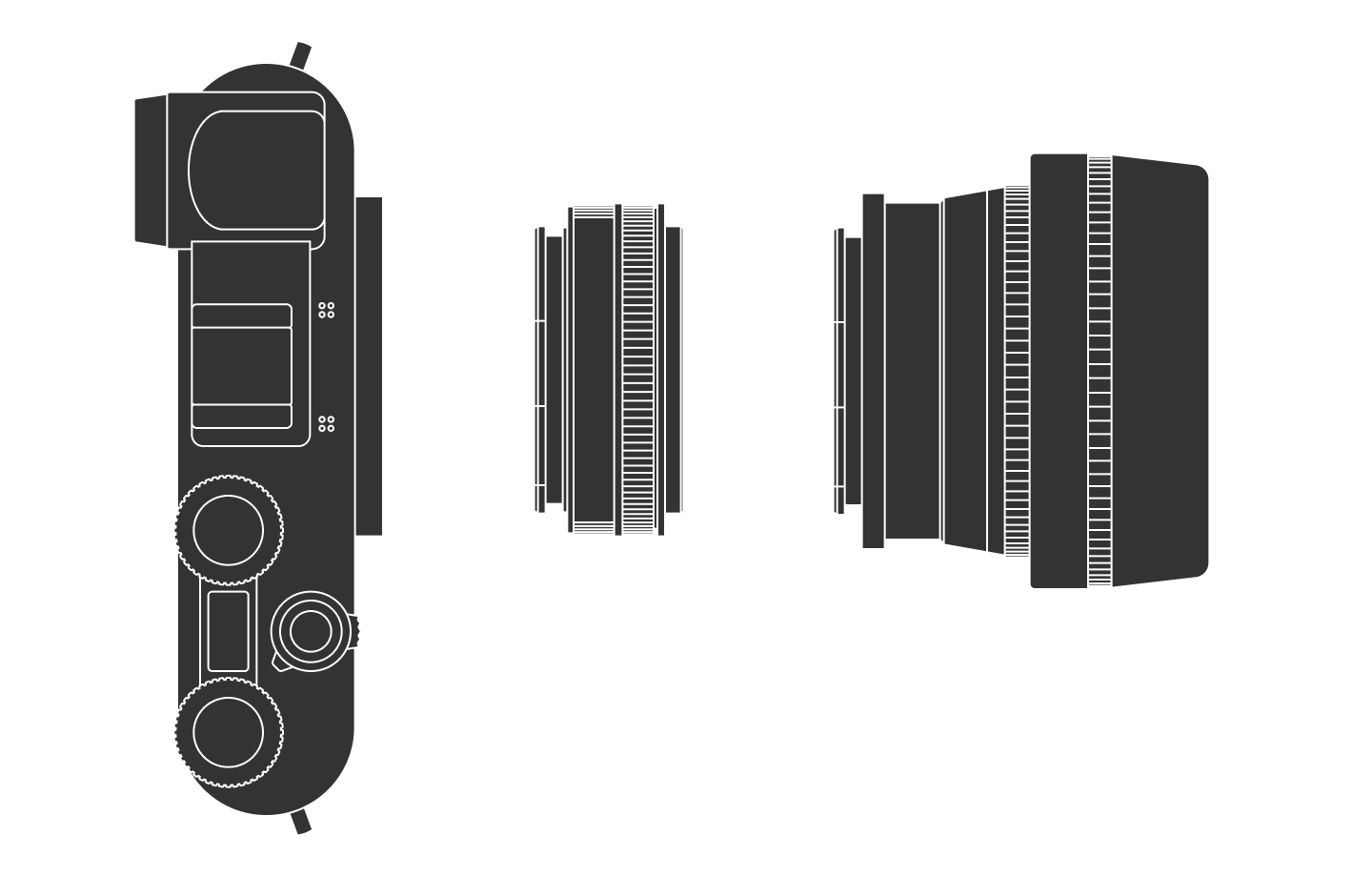
Camera setup
Thanks to Q for reading drafts of this.